
BS Computer Science in Hyderabad: Skills for a Successful Career
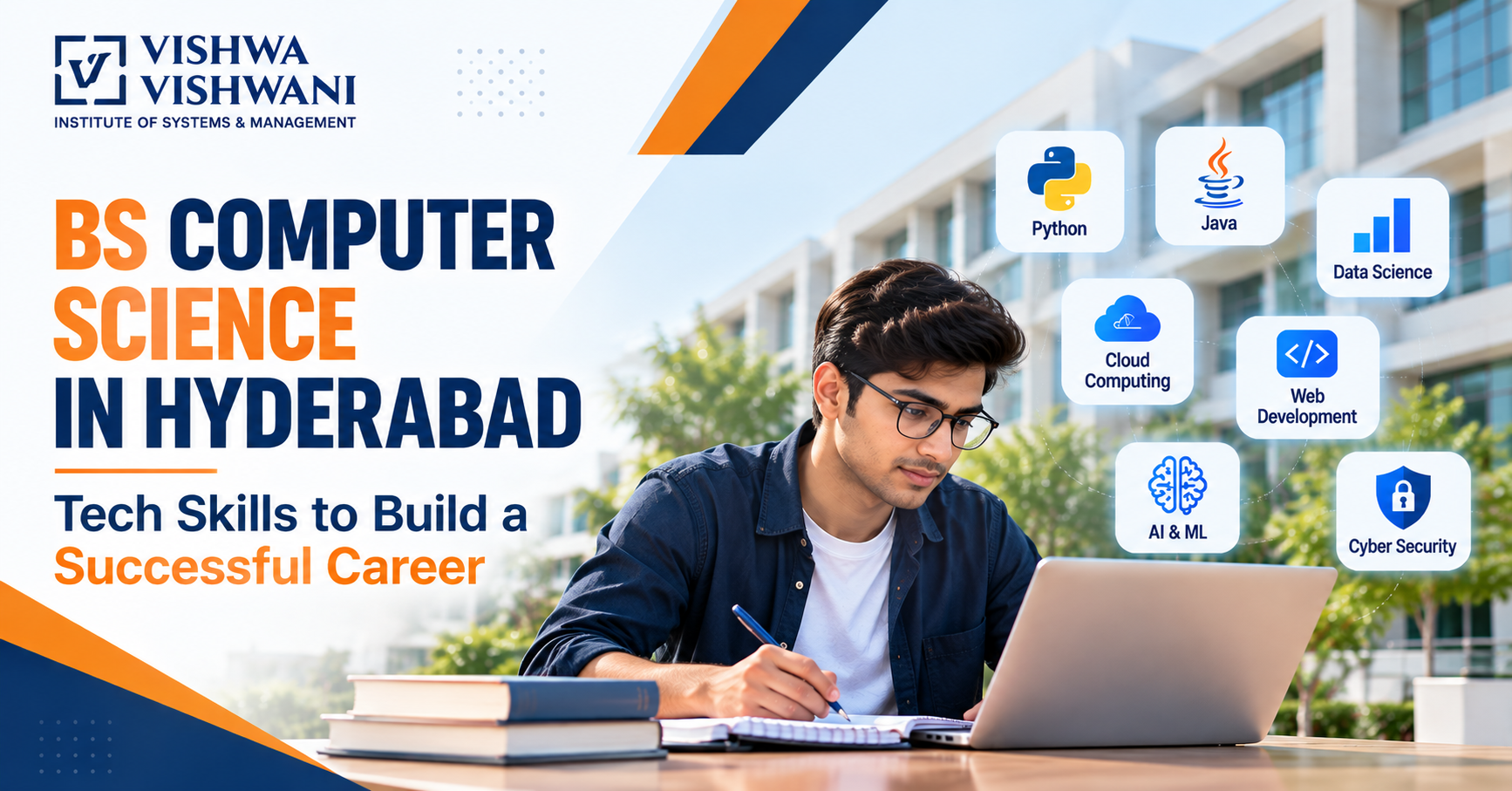
BS Computer Science in Hyderabad provides you with an excellent academic foundation, but here comes the harsh reality – a degree is not enough for landing a job. Employers will only be interested in candidates who have the ability to do something, solve problems, and adapt. The good news is that you don’t have to learn everything.
You have to learn the right things in the right sequence. In this blog, we will show you precisely what skills you should acquire, how to sequence them, and make your BS Computer Science in Hyderabad a career.
What Tech Skills Should BS Computer Science Students Learn for a Career?
If you are pursuing a BS Computer Science course in Hyderabad, your curriculum covers theory and some coding. But the skills that get you shortlisted are practical. Let’s break down what matters.
Programming and Problem-Solving
You have to master one language, not five. Python is a good starting point for data science and automation. Java continues to be used as a backend language in enterprise firms. Choose one and practice building projects and debugging.
Algorithmic thinking is checked by firms in their recruiting tests for BS graduates, and the optional coding demonstrates gratitude to practical knowledge.
Web Development
Even if you never work as a web developer, learning how the web functions can increase your marketability. HTML, CSS, and JavaScript provide the base for everything you need to know. After that, learning about how front-end and back-end communicate using APIs and databases will give you a lot of knowledge.
How Can Data and Database Skills Help BS Computer Science Students?
Data is everywhere, and there is a need for students who know how to work with data. The BS Computer Science degree in Hyderabad includes basic database subjects, however, employers want to see your ability to manage and make sense of data independently.
Database Management
SQL is the language of data. Find out how to write queries, join tables, and design basic schemas. Relational databases continue to drive the majority of applications in business today. Begin by using MySQL or PostgreSQL, and work with actual datasets.
Data Analysis
Excel is the beginning. With Python and using pandas, you move forward. Data visualization with matplotlib or Tableau will help students to present their results. Basic statistics like mean, median, distribution help you to not embarrass yourself when someone asks about your data.
Can Cloud Computing and Cybersecurity Skills Improve Career Opportunities?
Absolutely. This is what makes you different from the hundred other candidates applying for the same job. Let’s see how each one fits.
Cloud Computing
Today, most applications run in the cloud. You must know about cloud computing to remain relevant, but at this point you should not be an expert in technologies, just learn what cloud computing is all about, application deployment, and scalability.
Cybersecurity Fundamentals
All businesses are concerned about security. You do not need to be a network security expert; however, having knowledge of some basics of network security along with the different attacks is enough to make you a good employee.
Which Tech Skills Should Students Choose Based on Their Career Goal?
Do not try to learn everything. Choose a path based on where you want to go, not what is currently trending. For software development, learn programming + web development + Git. If you’re interested in data, learn Python + SQL + analysis. Cloud & IT careers require networking + cloud fundamentals. Cybersecurity requires networking + Linux + security fundamentals.
The BS Computer Science degree offered by the Vishwa Vishwani School of Business includes an apprenticeship program, so you will develop these skills during work experience, not just academic studies. This structure helps bridge the gap faced by most new graduates.
How Can Students Build a Job-Ready Tech Skill Set?
Choose a specific career path rather than trying to learn everything at once. Lay down your basics first: programming, problem-solving, a database. Create 2–3 useful projects that you can speak about during interviews. Learn continuously as technology evolves. There’s a gap between a degree and a job.
FAQ's
Programming, Data Structures, SQL, and one specialization such as web, data, cloud, or security. This covers all the fundamentals that are tested by employers.
Of course, but you will have to be skilled in practice and complete 2–3 projects other than coursework. The degree is just a key; your portfolio is an opener.
Yes. Knowledge about coding helps even in non-developer positions, and most tech entry-level positions require programming skills.
Definitely. Cloud skills are now essential even at junior levels, and having basic knowledge of deployment is definitely a bonus.
Internships, apprenticeships, open-source contributions, and personal projects. Begin with small steps and document everything.